Manual Link Building vs Automated Link Building remains a pivotal topic in the ever-evolving field of digital marketing. As search engine algorithms and user behaviours continue to change, understanding the most effective strategies for acquiring high-quality backlinks is crucial.
This guide is designed to demystify the process of manual versus automated link building, providing the latest techniques, tools, and resources to optimise your SEO efforts.
Whether you are a seasoned marketer or just starting, this guide will help you navigate the complexities of link building, ensuring your website achieves and maintains top search engine rankings.
Table of Contents
- Introduction
- What is Manual Link Building?
- What is Automated Link Building?
- Manual Link Building vs Automated Link Building
- Best Practices for Manual Link Building
- Best Practices for Automated Link Building
- Internal Link Building
- FAQs
- Conclusion
Introduction
Link building is a critical component of SEO, helping to improve search engine visibility and drive organic traffic. This guide will explore the differences between manual and automated link building, providing insights and strategies to optimise your efforts.
What is Manual Link Building?
Manual link building involves human-driven efforts to acquire backlinks. This method requires a hands-on approach, ensuring each link is secured through personalised outreach and relationship building.
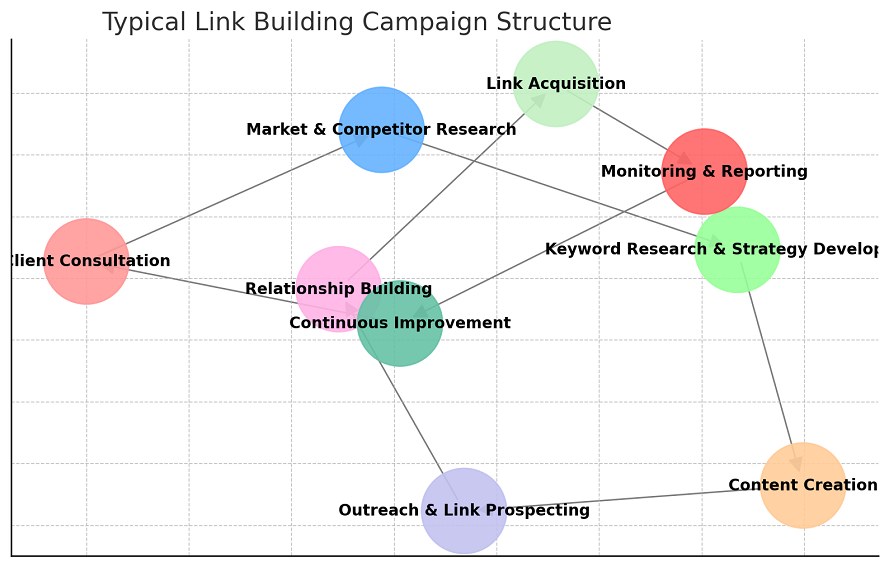
Techniques for Manual Link Building
- Guest Posting:
- Research authoritative websites in your industry that accept guest posts.
- Craft high-quality, relevant content and reach out to site owners with your pitch.
- Follow up to ensure your content is published with a backlink to your site.
- The Skyscraper Technique:
- Identify high-performing content in your niche using tools like Google Trends and Ahrefs.
- Create a better, more comprehensive version of this content.
- Conduct targeted outreach to influencers and other blogs to promote your improved content.
- Broken Link Building:
- Use tools like Ahrefs or Moz to find broken links on relevant websites.
- Reach out to the site owner, pointing out the broken link and suggesting your content as a replacement.
- Unlinked Brand Mentions:
- Monitor the web for mentions of your brand that don’t include a link.
- Contact the website and request that they add a link to your site.
- Editorial Links:
- Definition: Editorial links are links that are earned naturally due to the merit of your content, not through any direct outreach or payment. These links are given by editors or journalists when they find your content valuable and relevant.
- Acquisition Strategies:
- Create High-Quality Content: Consistently publish content that is informative, unique, and valuable to your target audience.
- Build Relationships: Develop relationships with editors, journalists, and influencers in your industry. Engage with them on social media, comment on their articles, and provide value without asking for anything in return.
- PR Campaigns: Launch PR campaigns that highlight your expertise and achievements, making it easier for editors to discover and link to your content.
- Connectively:
- What It Is: Connectively is a platform by Cision that allows brands to respond to journalist queries through a subscription-based model where you purchase “pitches” each month.
- How to Use: Sign up for a subscription, monitor the dashboard for relevant journalist queries, and use your purchased pitches to respond with valuable insights or stories that can earn you backlinks.
- Qwoted.com:
- What It Is: Qwoted is a platform that connects media professionals with brands, experts, and small businesses.
- How to Use: Create a profile, list your areas of expertise, and respond to media requests. Building relationships with journalists on Qwoted can lead to valuable editorial links.
- Digital PR and Newsworthy Content:
- Digital PR involves creating newsworthy content and reaching out to journalists and bloggers. If they cover your story, they usually link back to your site. This method leverages high-authority sites for backlinks.
- Tools like Prowly can help you find journalist contacts and manage your outreach efficiently (Semrush).
- Content Partnerships and Collaborations:
- Partnering with other brands or influencers to create content (e.g., joint webinars, research reports, co-authored articles) can lead to natural backlinks.
- This strategy not only diversifies your backlink profile but also enhances your content’s reach (Sendible).
- Resource Page Link Building:
- Identify resource pages in your niche that link out to valuable content. Reach out to the site owners with your high-quality content that they can include in their resource lists.
- This method is effective because resource pages are designed to link to authoritative and useful content (Backlinko).
- Creating Visual Content:
- Infographics, charts, graphs, and other visual content are highly shareable and can attract backlinks from various sites that find your visuals useful.
- Platforms like Slideshare can be used to share your visual content and gain backlinks from related websites (SEOwind).
- Blogger Reviews:
- Send your product to bloggers and ask them to review it. Although you should not exchange products directly for links (to avoid penalties), genuine reviews often result in natural backlinks.
- This strategy can be scalable and helps build relationships with influencers in your niche (Backlinko) (Sendible).
For more detailed strategies on how to acquire links, visit our manual link building service page.
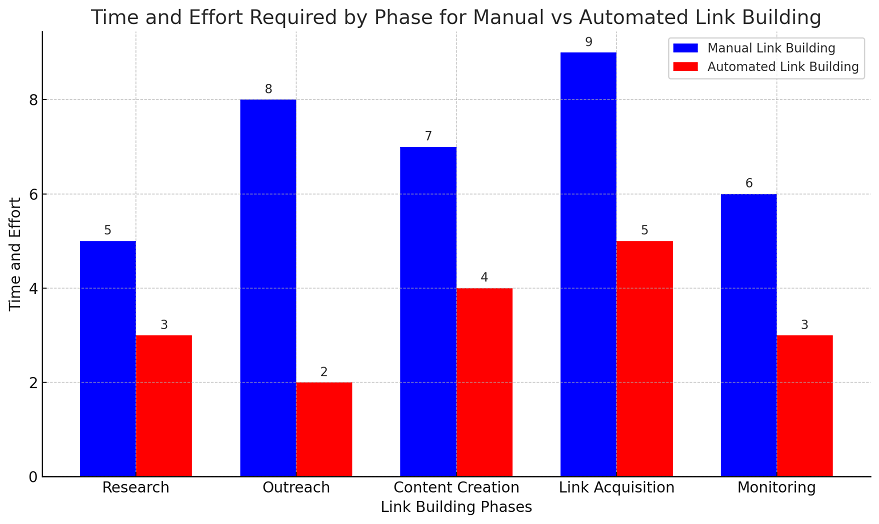
Pros and Cons of Manual Link Building
Pros:
- Quality Control: High-quality, relevant backlinks.
- Trust: Greater trust from search engines.
- Relationships: Builds strong relationships with site owners.
Cons:
- Time-Consuming: Requires significant time and effort.
- Resource-Intensive: Needs more resources and investment.
- Slower Results: Takes longer to see results.
Examples of Manual Links
- Guest Post on a High-Authority Blog: Writing an article for a well-known industry blog and including a link back to your website.
- Broken Link Replacement on an Industry Resource Page: Finding a broken link on a popular resource page and suggesting your relevant content as a replacement.
- Editorial Link: An editor of a leading industry magazine links to your comprehensive research article due to its valuable insights.
What is Automated Link Building?
Automated link building uses software and tools to acquire backlinks quickly, reducing the manual effort involved in traditional link building methods.
While full automation is rare, several tools can significantly streamline and scale parts of the link building process.
Techniques for Automated Link Building
- Link Building Software: These tools automate aspects of the link building process, from finding prospects to managing outreach campaigns.
- Respona: Automates parts of the outreach process, including finding contact information, sending personalised emails, and tracking responses. This tool helps scale outreach campaigns efficiently by automating repetitive tasks.
- BuzzStream: Manages and automates the outreach process by keeping track of conversations, managing campaigns, and using browser extensions to find contact information quickly. It helps maintain organisation and efficiency in outreach efforts.
- Hunter.io: Specialises in finding and verifying email addresses, crucial for outreach campaigns. It speeds up the process of contacting potential link partners by automating email discovery and verification.
- Backlink Analysis and Prospecting Tools: These tools help identify link opportunities by analysing competitors’ backlinks and finding high-quality prospects.
- Ahrefs: Known for its comprehensive backlink analysis, Ahrefs provides extensive data on backlinks, anchor texts, and referring domains. While it does not fully automate link building, it aids significantly in discovering link opportunities and monitoring backlinks.
- SEMrush: Offers a suite of tools for backlink analysis and link building. SEMrush’s Link Building Tool helps identify prospects, manage outreach campaigns, and track progress, facilitating and managing the manual outreach process.
- Moz: Provides several features to support link building efforts, such as Link Explorer, which helps users analyse backlink profiles, discover link opportunities, and monitor link health. Moz aids in the manual link building process, making it more efficient and informed.
- Automated Directory Submissions: Submitting your website to multiple directories through automation can be a quick way to build backlinks. However, it is essential to ensure these directories are reputable to avoid penalties.
- Article Spinning and Submission: Using software to create variations of your content and submit them to various sites can help build backlinks. However, this method carries a higher risk of creating low-quality or spammy links.
Pros and Cons of Automated Link Building
Pros:
- Efficiency: Saves time and effort by automating repetitive tasks.
- Scalability: Can handle larger volumes of backlinks.
- Consistent Efforts: Ensures a steady flow of backlinks by automating parts of the outreach and follow-up process.
Cons:
- Risk of Penalties: Higher risk of spammy, low-quality links leading to penalties from search engines.
- Less Control: Limited control over link quality and placement.
- Potential Spam: May result in irrelevant or low-value links, which can harm your site’s reputation and SEO performance.
Examples of Automated Links
- Automated Directory Submissions: Using a tool to submit your site to 100+ directories with a single click.
- Article Spinning: Creating multiple versions of a single article and submitting them to various article directories.
- Outreach Automation with Respona or BuzzStream: Automating the process of finding contact information, sending personalised emails, and tracking responses.
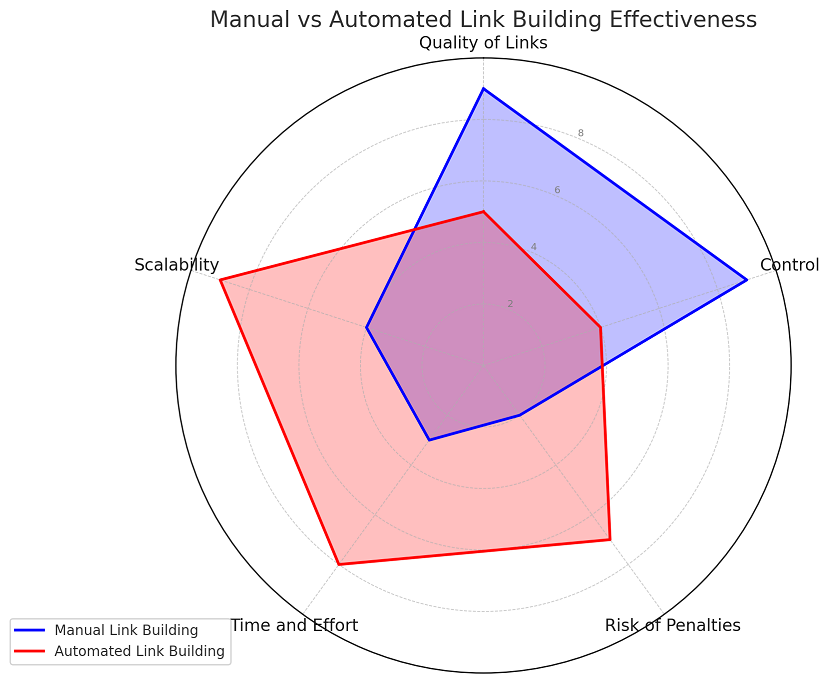
Manual Link Building vs Automated Link Building
When comparing manual link building vs automated link building, the key differences lie in quality, control, and risk.
Manual link building offers better quality and control but is more time-consuming. Automated link building provides efficiency and scalability but comes with higher risks.
Best Practices for Manual Link Building
- Personalised Outreach: Craft personalised emails to website owners.
- High-Quality Content: Create valuable, share-worthy content.
- Relationship Building: Focus on building long-term relationships.
- Monitoring: Regularly monitor and analyse your backlink profile to ensure quality.
Best Practices for Automated Link Building
- Use Reliable Tools: Tools like Ahrefs, SEMrush, and Moz can help automate and manage link building tasks effectively.
- Human Oversight: Combine automation with human oversight to ensure quality. While automation can handle repetitive tasks, human review is essential to maintain link relevance and quality, and to ensure compliance with SEO best practices.
- Consistent Monitoring: Regularly monitor your backlink profile to identify any low-quality or spammy links that may harm your site’s SEO. Use tools like Ahrefs and Moz to track your backlinks and set up alerts for new backlinks. Regular monitoring helps you maintain a clean backlink profile and respond quickly to any negative SEO attacks.
Internal Link Building
Internal link building involves creating links between pages on the same website. This often-overlooked tactic can significantly improve a site’s SEO by enhancing navigation, distributing link equity, and helping search engines understand the structure and hierarchy of your website.
Benefits of Internal Link Building
- Improved User Experience: Internal links help users navigate your site more easily, leading to longer site visits and lower bounce rates.
- Enhanced Crawling and Indexing: Search engines use internal links to discover and index new content on your site.
- Distributed Link Equity: Internal links distribute the authority of your site’s backlinks throughout your site, helping other pages rank better.
- Keyword Optimisation: Anchor texts used in internal links can help signal to search engines what the linked page is about.
Best Practices for Internal Link Building
- Create Relevant Links: Link to related content that will provide additional value to the user.
- Use Descriptive Anchor Texts: Use clear and descriptive anchor texts that accurately describe the linked content.
- Avoid Over-Optimisation: Do not overuse internal links or use keyword-stuffed anchor texts.
- Regular Audits: Regularly audit your internal links to ensure they are working correctly and providing value.
Internal Link Building Automation
- Automation Features:
- Automated Suggestions: As you write or update your content in WordPress, Link Whisper automatically suggests relevant internal links based on the content.
- Bulk Linking: You can add internal links to existing content in bulk, saving a significant amount of time.
- Advanced Reporting: Provides reports on internal link statistics, broken links, and orphaned content (pages with no internal links).
- Keyword Linking: Allows you to set specific keywords to automatically link to particular pages, ensuring consistent internal linking.
- Best For: WordPress sites, especially those with extensive content needing thorough internal linking.
InLinks
- Automation Features:
- Automated Internal Linking: InLinks uses a semantic understanding of your content to suggest and implement internal links automatically.
- Content Analysis: Analyses the content on your site to find and create contextual internal links.
- Schema Markup: Enhances SEO by providing schema markup alongside internal linking, helping search engines understand the content better.
- Integration with Google Search Console: Uses data from Google Search Console to refine and improve internal linking strategies.
- Best For: Websites needing automated internal linking with a focus on semantic SEO and content analysis.
Identification Tools (Not Fully Automated)
While these tools primarily identify internal linking opportunities and do not automate the process, they are still valuable for large sites:
Screaming Frog SEO Spider: Identifies internal link opportunities, broken links, and provides a detailed audit of the site’s link structure.
SEMrush Site Audit: Highlights internal linking issues and suggests improvements, such as linking orphaned pages.
Ahrefs Site Audit: Offers in-depth internal link analysis and recommendations.
Yoast SEO Premium: Provides internal linking suggestions and analysis while writing content in WordPress.
For large sites, using a combination of automated tools like Link Whisper or InLinks with identification tools like Screaming Frog or SEMrush can provide a comprehensive internal linking strategy. This ensures that internal links are optimised effectively and efficiently across thousands of pages.
FAQs
Q: What is the main difference between manual and automated link building? A: Manual link building involves personalised outreach and relationship building to acquire backlinks, whereas automated link building uses software to streamline and scale the process.
Q: Are automated link building methods safe? A: Automated link building can be safe if done correctly with high-quality tools and human oversight. However, there’s a higher risk of acquiring low-quality or spammy links, which can lead to penalties.
Q: Can I combine manual and automated link building? A: Yes, combining both methods can be effective. Use automation for repetitive tasks like outreach and tracking, while using manual efforts for building relationships and securing high-quality backlinks.
Q: How do I ensure the quality of backlinks in automated link building? A: Regularly review the backlinks acquired through automation, using tools to monitor their quality. Ensure that the linked sites are reputable and relevant to your niche.
Q: What are some reliable tools for automated link building? A: Reliable tools include Ahrefs, SEMrush, Moz, Respona, BuzzStream, and Hunter.io. These tools help automate various aspects of the link building process, from outreach to tracking and monitoring.
Conclusion
Both manual and automated link building have their place in a comprehensive SEO strategy. Manual link building is essential for acquiring high-quality, relevant backlinks through personalised outreach and relationship building.
Automated link building, on the other hand, offers efficiency and scalability, making it easier to manage larger volumes of backlinks.
Internal link building is also a crucial tactic that should not be overlooked, as it improves user experience, enhances crawling and indexing, and distributes link equity throughout your site.
By combining these methods and adhering to best practices, you can optimise your link building efforts and enhance your website’s search engine rankings.
For expert link building services, visit Digitalhound’s Link Building Services.


Digitalhound's work spans technical SEO, AI-assisted content strategy, conversion optimisation and brand authority. The agency's content has achieved first page Google rankings against globally recognised publishers including Search Engine Land, TripAdvisor and Saga Holidays.
Darryl is a sought-after speaker at digital marketing conferences and has worked with clients ranging from independent law firms to FTSE-listed businesses. He writes on the intersection of AI, search strategy and commercial communication.
Digitalhound | 207 Regent Street, London W1B 3HH | digitalhound.co.uk | content@digitalhound.co.uk | 020 7873 2476

Great post!
Bookmarked this page.
Solid content here.
Bookmarked this page.
I was very pleased to discover this great site. I want to to thank you for your
time for this particularly fantastic read!! I definitely appreciated every bit of it and i
also have you bookmarked to look at new information in your website.
Solid breakdown of the tradeoffs. One thing I’d add: the middle ground of semi-automated outreach where you automate research and personalization templates but still manually review each prospect before sending. We use something similar and it avoids the spam trap while scaling way past pure manual.